

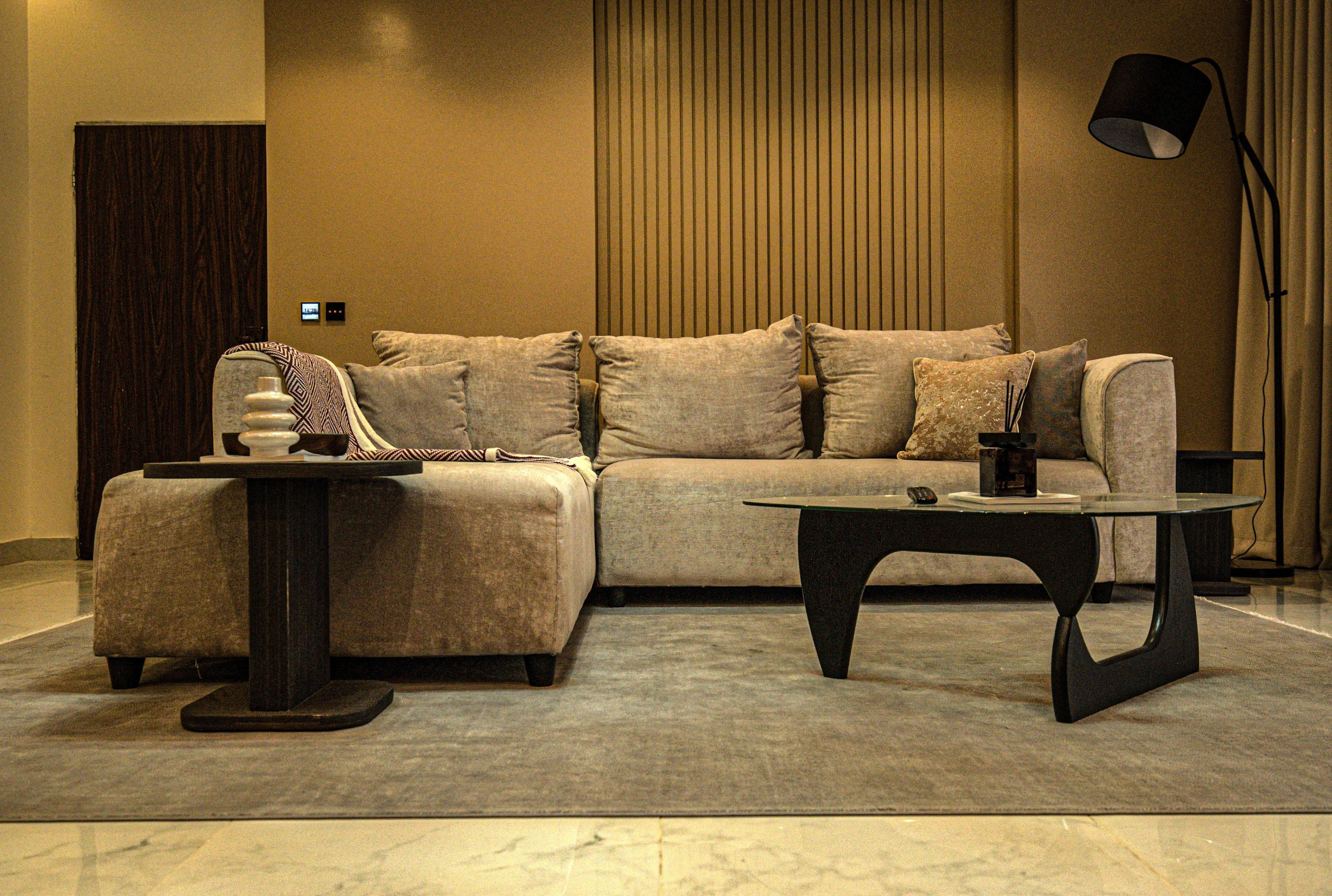
A minimalist living room should still feel like somewhere you want to spend time. The aim is to give furniture, light and everyday life enough room, rather than strip away every sign of personality. Start with a comfortable layout, choose a few textures you enjoy and let the room develop around how you use it. Small, deliberate choices often make the most lasting difference.
A room can have very little in it and still feel awkward. Minimalism works best when the things that remain have a clear purpose and a comfortable relationship to one another. Before choosing a colour or buying a new table, look at how you move through the living room. Where do you sit most often? Can someone pass behind the sofa? Is there a surface within reach for a cup or a book?
Start with the main seating arrangement. A sofa, one or two chairs and a low table may be enough, depending on the room. Give them a common centre rather than pushing every piece against a wall. A rug can help define that centre, especially where the living area shares space with dining or a route through the house. Choose its size in relation to the furniture, so it feels part of the arrangement rather than an isolated patch on the floor.
A restrained palette makes these relationships easier to see. Warm whites, soft greys and wood tones can provide a useful background, but a neutral room does not need to look flat. Vary the surfaces: a textured cushion against smoother upholstery, a darker table beside a pale sofa, or curtains that catch the daylight differently from the wall. Those small differences add depth without asking for more objects.
Lighting deserves the same attention as furniture. Daylight changes the appearance of a room throughout the day, so keep that in mind when placing a chair or choosing curtain fabric. For evenings, a lamp near a favourite seat can feel more inviting than relying entirely on a bright ceiling fitting. Where shelves or wall details are lit, leave some quieter areas around them. Contrast helps the room feel settled.
Storage is what makes a simple room practical. Think about the items that actually collect there: remotes, chargers, books, toys or work papers. Closed storage can keep some of them out of sight, while an open shelf leaves room for objects you enjoy seeing. There is no need to remove a meaningful photograph or a well-used book just to keep a surface empty.
Finally, give changes a little time. Live with a rearranged sofa or a cleared corner before filling it again. Keeping furniture that works, repairing a useful piece and buying fewer replacements can be a sensible place to begin. A good minimalist living room feels comfortable and personal, with enough breathing room for the people who use it.
More from the Journal
More stories coming soon
Other featured stories will appear here when they are published.